

Outdoors & Fitness
The Best Adjustable Kettlebells (2026): Four Bells Compared, One to Skip
Adjustable kettlebells promise a whole rack in one bell, but shape, handle feel and durability vary widely. We compare four current models and flag one to skip.
The short version
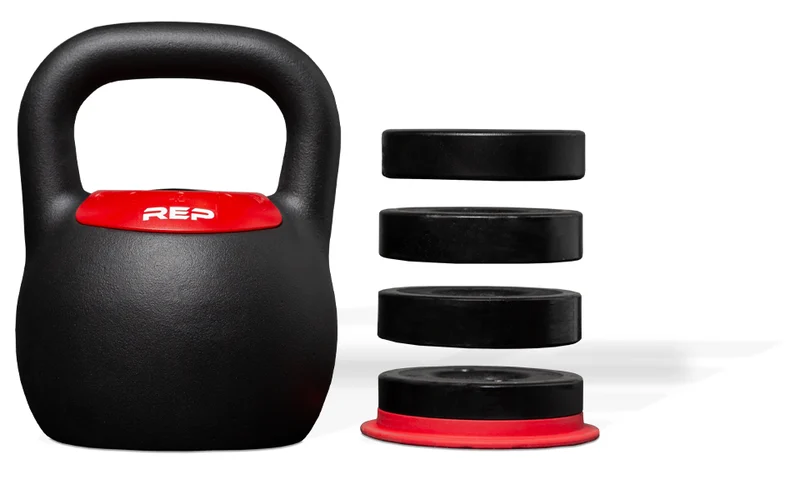
For one bell that actually feels like a kettlebell, the REP Fitness Adjustable Kettlebell is our pick: a cast-iron competition shape, a grippy near-35 mm handle and a lifetime warranty. The PowerBlock is the runner-up when durability and a small footprint matter most, and the Bowflex SelectTech 840 is a fair budget entry if fast changes and low cost outweigh a metal build. Skip plate-loadable swing bells such as the Titan unless you only do two-handed swings and already own plates.
Our picks at a glance
- REP Fitness Adjustable Kettlebell - Buy. The closest an adjustable bell gets to a real cast-iron kettlebell, with a quick push-and-twist dial.
- Bowflex SelectTech 840 - It depends. The fastest, most affordable dial bell, if you can live with a plastic shell and a 40 lb ceiling.
- PowerBlock Adjustable Kettlebell - Buy. The most rugged, compact option, with a magnetic pin that changes weight in seconds.
- Titan Fitness Titan Plate-Loadable Kettlebell Swing - Skip. A cheap plate-loaded post that swings like a lopsided club, not a kettlebell.
The verdict in 30 seconds
What mattered most
- Weight range
- Adjustment method
- Shape and feel
- Shell material
- Handle
- Warranty
An adjustable kettlebell can replace a shelf of cast-iron bells, but the mechanism, handle geometry and build quality decide whether it feels like a real kettlebell or a compromise. We synthesized independent expert assessments and long-term owner feedback across four models currently on sale in 2026. Three are worth your money for different training styles; one is a common purchase we would steer most people away from.
The closest an adjustable bell gets to a real cast-iron kettlebell, with a quick push-and-twist dial.
Best for: Lifters who do technical, ballistic work and want the most authentic kettlebell shape and grip.
- Cast-iron competition-style body and a near-35 mm powder-coated handle give it a genuine kettlebell feel through swings and snatches
- Push-and-twist dial with internal nylon thermoplastic fasteners locks each plate, so there is minimal rattle under load, and it carries a lifetime warranty
- Each unit only spans five increments, so a range (8-16 kg, 16-24 kg or 20-40 lb) must be chosen up front and may not cover both light and heavy lifters
- The weight-locking fasteners are plastic, the one component we would watch over years of hard use
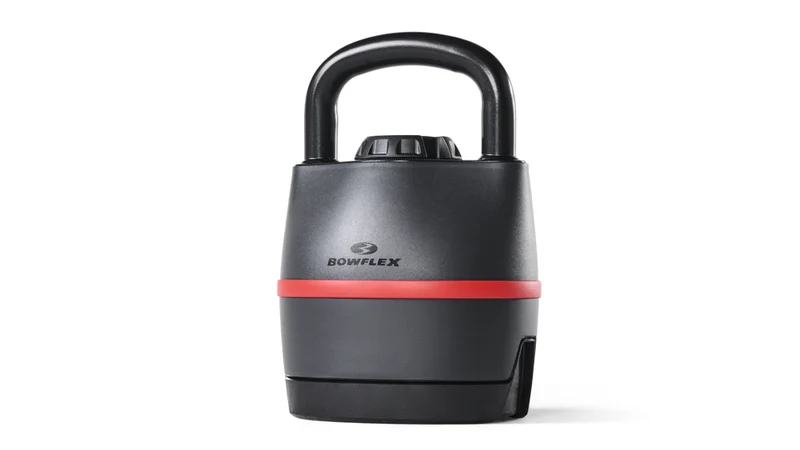
The fastest, most affordable dial bell, if you can live with a plastic shell and a 40 lb ceiling.
Best for: Beginners and space-conscious home exercisers who prize adjustment speed and price over a metal build.
- A cradle-and-dial system delivers the quickest weight changes in this group, replacing six bells from 8 to 40 lb
- Low cost and simple operation make it approachable for beginners and fast-paced circuit work
- The plastic outer shell feels less rugged than the metal rivals and is the part most likely to crack if dropped
- The handle window is shallow, so your wrist can catch the chunky selection dial on cleans, and 40 lb is a low ceiling for stronger swingers
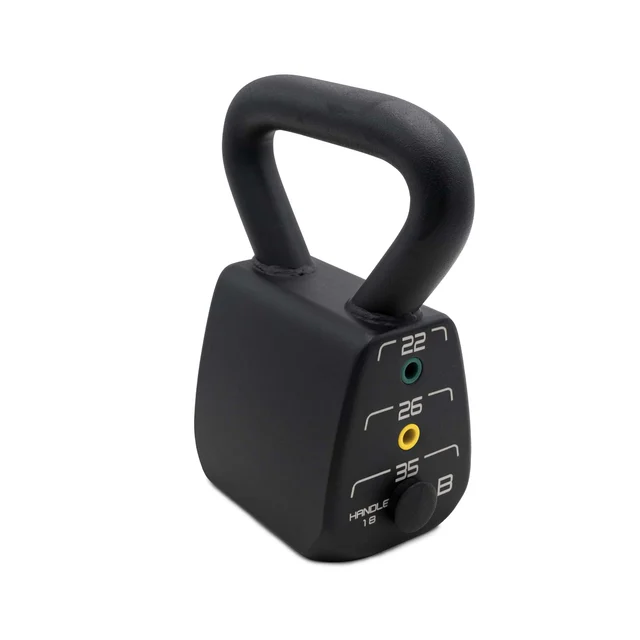
The most rugged, compact option, with a magnetic pin that changes weight in seconds.
Best for: Press-, squat- and swing-focused lifters who want maximum durability and the smallest footprint.
- All-steel construction and a magnetic steel-pin selector make it the most durable-feeling bell here, with a five-year warranty
- The flat, square body sits comfortably on the forearm in the rack position and takes up very little floor space
- The cowbell-like square profile feels awkward for halos and get-ups compared with a rounded bell
- The light model offers only four increments (18, 22, 26 and 35 lb), so the jumps are large and it sits at a higher price
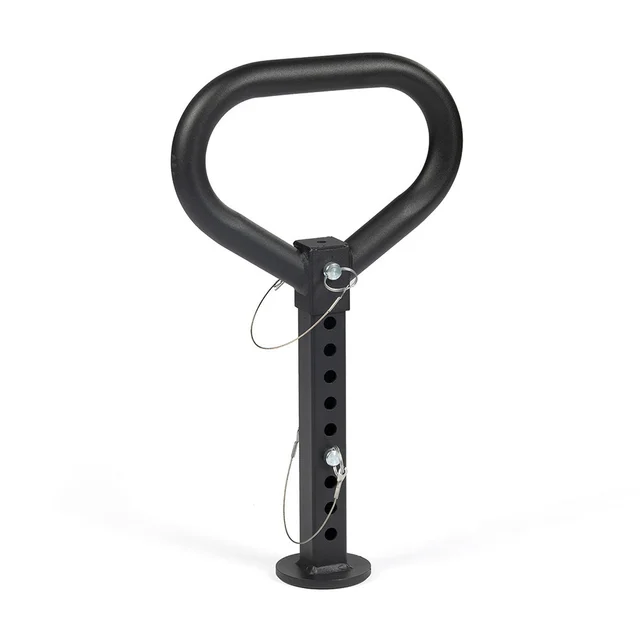
A cheap plate-loaded post that swings like a lopsided club, not a kettlebell.
Best for: Plate owners who only ever perform two-handed swings and want the cheapest possible ceiling.
- A vertical pin-hole post accepts Olympic plates for a very high nominal range, up to a 500 lb capacity
- Costs little on its own if you already own weight plates
- Plates are not included and sit off-center and low, so a loaded bell handles poorly for cleans, presses, racking and get-ups
- Changing weight means unpinning and restacking plates, far slower than any dial or pin bell
| Criteria | REP Fitness Adjustable Kettlebell Top pick | Bowflex SelectTech 840 | PowerBlock Adjustable Kettlebell | Titan Plate-Loadable Kettlebell Swing |
|---|---|---|---|---|
| Verdict | Buy it | It depends | Buy it | Skip it |
| Best for | Lifters who do technical, ballistic work and want the most authentic kettlebell shape and grip. | Beginners and space-conscious home exercisers who prize adjustment speed and price over a metal build. | Press-, squat- and swing-focused lifters who want maximum durability and the smallest footprint. | Plate owners who only ever perform two-handed swings and want the cheapest possible ceiling. |
| Price tier | $$ · mid-range | $ · budget | $$$ · premium | $ · budget |
| Weight range | 20-40 lb (or 8-16 / 16-24 kg) | 8-40 lb | 18-35 lb (heavy model 35-62 lb) | 8 lb empty, up to 500 lb capacity |
| Adjustment method | Push-and-twist dial | Twist dial in cradle | Magnetic steel pin | Load and pin Olympic plates |
| Shape and feel | Traditional competition bell | Rounded, slightly top-heavy | Square, cowbell-like | Off-center once loaded |
| Shell material | Cast iron | Plastic | Steel | Powder-coated steel |
| Handle | Near-35 mm, powder-coated | Shallow window, thinner bar | Contoured steel | Thick tubular |
| Warranty | Lifetime | 2-year limited | 5-year | 1-year |
Which one is right for you?
- Lifters who do technical, ballistic work and want the most authentic kettlebell shape and grip. Buy it REP Fitness Adjustable Kettlebell
- Press-, squat- and swing-focused lifters who want maximum durability and the smallest footprint. Buy it PowerBlock Adjustable Kettlebell
- Beginners and space-conscious home exercisers who prize adjustment speed and price over a metal build. It depends Bowflex SelectTech 840
- Plate owners who only ever perform two-handed swings and want the cheapest possible ceiling. Skip it Titan Fitness Titan Plate-Loadable Kettlebell Swing
How we judged the field
RBE synthesizes independent expert assessments and long-term owner feedback rather than lab-testing bells ourselves. For an adjustable kettlebell, three things matter more than the headline weight range. The first is how the loaded bell feels in your hand during ballistic work, where an off-center mass or a shallow handle shows up immediately. The second is how quickly and reliably you can change weight mid-session, since a slow or fiddly mechanism quietly kills the flow of a workout. The third is whether the mechanism and shell survive being dropped and swung for years.
With that in mind, we prioritized traditional handle geometry, honest increment spacing, and build materials that do not flex or rattle under load. We also insisted on finding at least one real reason to walk away from each product, because no adjustable bell fully matches a dedicated cast-iron set on feel. Four models on sale in 2026 rose to the top, and one common purchase earned a clear skip.
REP Fitness Adjustable Kettlebell - buy
This is the bell that feels the most like a real kettlebell. The body uses a rounded competition-style silhouette in cast iron, and the handle is a thick, powder-coated bar close to 35 mm, which gives a secure, non-slip grip through swings and snatches. Weight changes are a simple push-and-twist on the dial, and each plate is held by its own internal nylon thermoplastic fastener, so there is little of the rattle that plagues cheaper designs. A rubber base protects the floor, and the whole thing carries a lifetime warranty.
The trade-off is range. It is sold in three versions covering five increments each, so heavier and lighter lifters may need two units, and the plate-locking fasteners are plastic, the one part we would keep an eye on over years of hard use. For most home lifters, though, this is the bell to beat.
Bowflex SelectTech 840 - it depends
The 840 replaces six bells from 8 to 40 lb, and it changes weight faster than anything else here. You seat the bell in its cradle, twist a dial, and lift out the weight you want. That speed, along with a low price, makes it a sensible entry point for beginners and circuit-style sessions.
The compromises are physical. The outer shell is plastic, which keeps cost and weight down but feels less rugged than the metal rivals and is the part most at risk if the bell is dropped. The handle window is shallow, so your wrist can catch the chunky selection dial during cleans, and the 40 lb ceiling caps stronger swingers. If your priority is a metal build or heavier loading, look elsewhere; if it is speed and value, the 840 delivers.
PowerBlock Adjustable Kettlebell - buy
The PowerBlock is the most rugged and compact bell in the group. It is built from steel and uses a magnetic steel pin: insert the pin and lift to change weight in seconds. The light model covers 18, 22, 26 and 35 lb, and a heavier 35-62 lb version exists for stronger lifters. The flat, square body takes up very little floor space and sits comfortably on the forearm in the rack position, and it is backed by a five-year warranty.
The square, cowbell-like profile is the catch. It feels awkward for halos and get-ups, where a rounded bell tracks more naturally, and with only four increments the jumps are large, with a noticeable gap between 26 and 35 lb. For pressing, squatting and swinging, none of that matters, and the durability is a real advantage.
Titan Plate-Loadable Kettlebell Swing - skip
This is the dis-buy for most people. Rather than internal plates, it uses a vertical post with pin holes; you slide standard plates on and secure them with a pin, which yields a huge nominal range up to a 500 lb capacity at a low price. On paper it looks like a bargain.
The problem is feel. The plates are not included, and once loaded they sit off-center and low, so the bell swings like a lopsided club rather than a kettlebell. Two-handed swings are tolerable, but cleans, presses, racking and get-ups all suffer, and changing weight means unpinning and restacking plates. Unless you already own plates and only ever swing with both hands, it undercuts the entire point of a kettlebell.
REP Fitness Adjustable Kettlebell vs PowerBlock Adjustable Kettlebell: which should you buy?
These are the two we would spend real money on, and the choice comes down to shape and priorities. The REP wins on authenticity: a rounded competition-style body, a thick powder-coated handle and a smooth arc through swings and snatches, all backed by a lifetime warranty. The PowerBlock wins on ruggedness and footprint: an all-steel build, the fastest metal-bell adjustment via its magnetic pin, and a flat body that rides kindly on the forearm.
If your training leans on swings, snatches and get-ups and you want the closest thing to a fixed bell, choose the REP. If you drop weights hard, want the most compact unit, or need the longer usable range of the heavy model, the PowerBlock earns it. Neither is cheap, and both hold up better than the plastic-shelled alternatives over a few years of use.
What to look for
Start with the movements you actually do. Technical, ballistic work such as snatches, cleans and get-ups rewards a traditional round body and a 33-35 mm handle, which points to the REP or, on a budget, the Bowflex. If you mostly grind through presses, squats and two-handed swings, the PowerBlock’s square body is a non-issue and its durability becomes the deciding factor.
Check the increments, not just the range. Large jumps between weights can stall progress, and a bell that spans only five settings may not grow with you. Match the ceiling to your strength: a 40 lb top end suits many beginners but caps stronger lifters, who should look at the heavier PowerBlock or a second REP. Finally, weigh the handle. A shallow window or a thin bar changes grip comfort more than any spec sheet suggests, and it is the detail owners complain about most once the bell is loaded.
Our final take
For most people who want one bell that feels like a kettlebell, the REP Fitness Adjustable Kettlebell is the pick, thanks to its traditional shape, a grippy near-35 mm handle and a lifetime warranty on a cast-iron body. The PowerBlock Adjustable Kettlebell is the runner-up for lifters who want maximum durability and a compact footprint. The Bowflex SelectTech 840 is a reasonable budget entry if fast changes and low cost matter more than a metal build. Skip plate-loadable swing bells unless you only ever do two-handed swings and already own plates, because their loaded, off-center feel defeats the purpose of a kettlebell.
Questions, answered
Do adjustable kettlebells feel like real kettlebells?
The better ones come close. Cast-iron or steel bells with a traditional rounded body and a 33-35 mm handle, such as the REP, swing and rack much like a fixed bell. Plastic-shelled and plate-loaded designs feel bulkier or off-balance, especially on cleans and get-ups.
Which adjustment mechanism is most reliable?
Metal pin and dial systems tend to last longest. PowerBlock's magnetic steel pin and REP's push-and-twist dial change weight in seconds and hold firm under load. Plate-loaded posts are the slowest, and plastic-shelled dials are quick but feel less rugged over years of dropping.
What weight range should a beginner choose?
Most beginners are well served by a bell topping out near 35-40 lb, like the Bowflex or the light PowerBlock. Check the increments too: smaller steps between weights let you progress gradually, while large jumps can stall you between a weight that is too easy and one that is too hard.
Are plate-loadable kettlebells worth it?
Rarely, for most people. They are cheap and have a huge ceiling, but the plates sit off-center and low, so the bell handles like a lopsided club on anything beyond two-handed swings. If you want a versatile kettlebell for cleans, presses and get-ups, a dial or pin bell is the better buy.
Deciding between the top two? See our head-to-head: REP Fitness Adjustable Kettlebell vs PowerBlock Adjustable Kettlebell.
More Outdoors & Fitness reviews
 The Best 2-Person Backpacking Tents: 4 Compared (and One to Skip)
  The Best Backpacking Water Filters: 4 Compared
  The Best Bear Canisters: 4 Compared (and One to Skip)
  The Best Belay Devices: 4 Compared (and One to Skip)
  The Best Bike Bells: 4 Compared (and One to Skip)
  The Best Bike Chain Lubes: 4 Compared (and One to Skip)